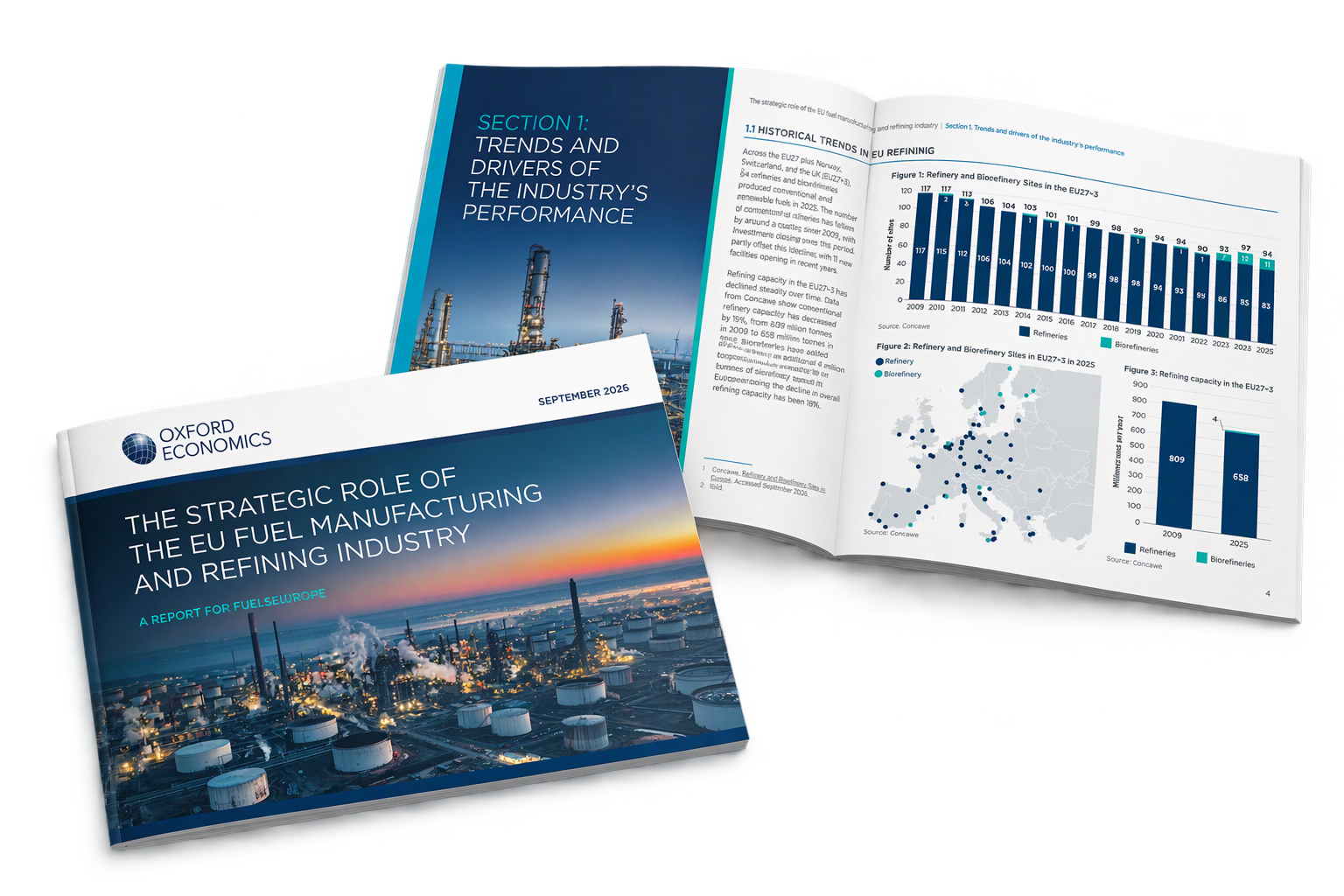
A new report by Oxford Economics for FuelsEurope examines the economic contribution of Europe’s fuel manufacturing and refining industry and the role it can play in Europe’s industrial transformation.
Europe’s fuel manufacturing and refining industry contributed €200 billion to EU GDP, more than €83 billion in tax revenues in 2025 and 1.8 million jobs, according to new research conducted by Oxford Economics for FuelsEurope.
The report, The Strategic Role of the EU Fuel Manufacturing and Refining Industry, looks at the sector’s direct economic contribution as well as its wider impact through European supply chains and employee spending. It also explores the industry’s connections with other sectors of the economy and its potential role in the transition towards renewable and low-carbon fuels.
Europe’s fuel manufacturing and refining industry is already undergoing significant change. Across the EU27, Norway, Switzerland and the UK, the number of conventional refineries fell from 117 in 2009 to 83 in 2025. At the same time, investment in the sector increased by 82% in real terms over the past decade, while new technologies and production pathways are creating opportunities to transform existing industrial assets.
The report also examines what could happen if refining capacity declines faster than the industry can transform. In Oxford Economics’ downside scenario, by 2035 EU GDP would be almost €25 billion below the baseline, employment approximately 120,000 lower, and government revenues approximately €14 billion lower.
The findings highlight the importance of managing Europe’s industrial transition in a way that supports investment and enables existing infrastructure and expertise to contribute to the development of renewable and low-carbon fuels.
Read the full study to explore the findings and what they could mean for the future of Europe’s fuel manufacturing industry.